Japan Was One of the Most Beautiful Places I’ve Ever Been. It Was Also the Most Stressful Trip I’ve Ever Taken.

I want to start there, because I think the version of Japan that lives on social media – the perfectly choreographed temple visits, the effortlessly ordered ramen, the serene onsen moments – is beautiful and real, and also genuinely incomplete.
I’m a type A traveler. I research obsessively, and I feel real anxiety when I think I’m doing something wrong. Japan, as it turns out, is a destination that social media loves to portray as a minefield of etiquette rules – and going in, I absorbed every single one of them. Don’t talk on the train. Don’t eat while walking. Don’t tip or you’ll accidentally offend someone. Bow correctly. Remove your shoes at exactly the right moment in exactly the right way.
And then you get there, jet-lagged and overstimulated, and you eat something while walking because you didn’t realize you’d crossed out of the festival zone. And someone double-taps on their phone somewhere near you on the metro. And you survive. And you look up and realize you’re standing in one of the most extraordinary places you’ve ever seen.
Here’s what I wish someone had told me before I went: Japan is not as fragile as social media makes it seem. The Japanese people are genuinely kind, patient, and forgiving of tourists who are clearly trying. The rules matter – but your genuine effort and respect matter more than your perfection.
There is one area where I’d urge you to be genuinely, rigorously careful – and that’s if you have a dietary restriction like celiac disease. Food in Japan requires real planning when you have a medical need. But that’s a whole separate post, which will follow this one.
The rest of this guide is the honest, practical version I wish I’d had – the things that would have made my trip less stressful and more beautiful. Because Japan is worth going back to, and I will.
At a Glance: Japan First-Timer Essentials
| Thing | What You Need to Know |
|---|---|
| Currency | Yen (JPY) – still bring cash in 2026 |
| IC Card (Suica) | Get one immediately. It changes everything. If you have an iPhone, you can add it to your wallet as a “Transit” card – you don’t need an extra app, and you don’t need an actual card. Just select Suica and add money to it! |
| Tipping | Not a thing. Don’t do it. Tour guides though, I think sometimes appreciate tips? But I |
| Tourist tax | Tripled to 3,000 JPY as of July 1, 2026 (sounds like a lot, but isn’t) |
| Shoes | Slip-on. Every single day. |
| Best base cities | Tokyo, Kyoto, Osaka – but get out of them into the countryside |
| Train system | Excellent. Confusing at first. Worth it completely. |
| Language barrier | Smaller than you fear. Use the Translate app. |
1. Get a Suica Card the Second You Land. I Mean It.
If there is one single piece of advice in this entire post that I want you to actually follow, it’s this one.
A Suica card (or any IC card) is a rechargeable transit card that works on virtually every train, subway, bus, tram, and ferry in Japan. It also works at convenience stores, vending machines, some restaurants, and a whole host of other places. You tap in, tap out, and the correct fare is automatically deducted. No ticket windows, no calculating fares, no fumbling with machines in three languages while a train is boarding.
Without one, navigating Tokyo’s metro is genuinely humbling. I’ve seen seasoned travelers completely undone by the Tokyo subway system – not because it’s impossible, but because buying individual tickets requires knowing exactly which fare to pay, across multiple competing train operators, before you board. It sounds manageable until you’re jet-lagged at Shinjuku Station, which handles over three million people daily and has around 200 exits.
In 2026, you can now set up Mobile Suica on an iPhone or Android without a Japanese credit card – a huge improvement. You can also pick up a physical IC card at major airports and train stations. Either way, load it with around 5,000-10,000 yen and top it up at any convenience store or station machine throughout your trip.
Important note: Suica does NOT work for Shinkansen (bullet train) tickets. Those are purchased separately. Suica is for everything else.
2. Japan Just Tripled Its Tourist Tax – Know Before You Go
This is a very current update that a lot of first-time Japan travelers are getting blindsided by: as of July 1, 2026, Japan’s international departure tax has tripled from 1,000 yen to 3,000 yen (roughly $20) per person, per departure.
This is collected automatically when you book your departing flight – it’s baked into your ticket price. So it’s not something you’ll need to scramble for at the airport, but it’s worth knowing it exists, especially if you’re comparing prices across different booking platforms.
Additionally, many cities now charge a separate hotel/accommodation tax ranging from 100 to 500 yen per night depending on the price of the room. Cities like Tokyo, Kyoto, Osaka, and now Hiroshima are among those that collect it. It adds up on a longer trip, so factor it into your budget.
Japan is also rolling out some significant overtourism management rules in late 2026 – including ending on-the-spot tax-free shopping exemptions for tourists starting November 1, 2026. If you’re a shopper who planned on hitting department stores and claiming tax exemptions at the register, note that system is changing. Keep an eye on updates if your trip falls after October 2026.
3. Cash Is Still King in Places That Matter
Yes, Japan has gotten more card-friendly. Major hotels, chain restaurants, and most shops in tourist areas will now take credit cards without issue. But the places you’ll most want to experience as a first-timer – tiny ramen shops, temple entrance gates, rural vending machines, street food stalls, local markets, vintage shops in covered arcades – often still run cash only.
The 7-Eleven ATM is your best friend in Japan. It accepts foreign cards, gives good rates, and there’s one approximately every 200 meters in any Japanese city. Keep around $100 equivalent in yen on you at all times, in smaller bills and coins – a lot of casual spots can’t make change for large notes, and fumbling a 10,000-yen bill at a ramen counter is a perfectly preventable form of embarrassment.
One more cash rule: Don’t tip. Not at restaurants, not for taxis, not at hotels. Tipping can actually be perceived as awkward or even rude in Japan – staff take genuine pride in their service and it’s simply not part of the culture. A warm arigato gozaimasu goes infinitely further.
4. Wear Shoes You Can Slip On and Off. Every Single Day.
This sounds like small advice. It is not small advice.
You will remove your shoes at ryokan (traditional inn) entrances, at many traditional restaurants, at temples, at certain fitting rooms, and at various other places that will surprise you. Wearing shoes that require untying, re-lacing, or wrestling off in a doorway while a line of patient Japanese guests waits behind you is a quietly mortifying experience.
Pack one versatile pair of comfortable slip-on shoes and thank yourself every single day. Comfortable slip-on sneakers or loafers on Amazon are exactly what you’re looking for.
5. The Food WILL Require Some Strategy if You Have Food Allergies.
Let me be more honest here than most Japan travel guides are: Japanese food is extraordinary. It’s also one of the more challenging cuisines in the world if you have any dietary restrictions – particularly anything related to gluten, as soy sauce (which contains wheat) is the backbone of the cuisine and appears in almost everything.
If you have no dietary restrictions: be brave, wander into tiny places, order the daily special, try things you can’t pronounce, and absolutely do not skip the train station bento boxes. They are one of the most underrated food experiences in Japan – fresh, beautiful, local, and priced in a way that makes airport food weep with shame.
If you do have dietary restrictions – especially celiac disease – please read my companion post below before you do anything else. I got sick on my trip. More than once. And I want to save you from that, because the trip itself is too wonderful to spend part of it feeling terrible.
The one rule that applies to every traveler: Don’t try to wing meals in Japan the way you might in Italy or Mexico. The more planning you do upfront – knowing which neighborhoods have what, identifying the places you want to try – the more you’ll actually enjoy eating here, restriction or not.
6. The Train System Is the Best Way to Get Around. It’s Also Initially Baffling.
Japan’s rail network is one of the most impressive on the planet. Trains are fast, punctual (a 15-minute delay genuinely makes national news), clean, and extraordinarily well-connected. The Shinkansen bullet trains between major cities are experiences in themselves – smooth, quiet, and absurdly fast.
For most first-timers doing Tokyo + Kyoto + Osaka, the question becomes: do I buy a JR Pass?
The honest answer: The nationwide JR Pass probably won’t save you money on a standard 2-week itinerary unless you’re adding Hiroshima, Hokkaido, or other far-flung destinations. But regional rail passes can be outstanding value. The Kansai-Hiroshima Area Pass is a strong pick if you’re doing Kyoto, Osaka, and Hiroshima. The JR Kyushu Pass is worth every yen if you’re venturing to that southern island.
Run your actual itinerary through a fare calculator before buying any pass – it only saves money if your routes add up.
7. Tokyo Is Overwhelming for the First Few Days. That’s Normal.
Tokyo is one of the largest, densest cities on earth. The neon, the crowds, the sheer scale of it, combined with jet lag (which hits brutally on a Japan trip – you’re crossing 13-14 time zones from the US) means most first-timers spend their first 48 hours in a kind of beautiful, disoriented haze.
This is normal. It passes. And within a few days, you’ll find your rhythm.
A few things that help: Don’t plan too much for day one. Get a Suica card, get some yen, find something delicious to eat, and give yourself permission to just wander. Tokyo rewards wandering like almost no city I’ve ever been in. The streets outside Senso-ji Temple, the Yanaka neighborhood, a covered shotengai (shopping arcade) in any direction you walk – you don’t need a checklist to fall completely in love with this city.
Booking a private first-timer Tokyo walking tour for day two or three – once the jet lag fog starts to lift – is genuinely one of the best investments you can make. A local guide who knows the metro and can translate menus is priceless at that stage.
8. Stay in a Ryokan for at Least One Night
This is non-negotiable on a first trip. I don’t care how long your trip is – even one night in a traditional Japanese inn is worth reorganizing your entire itinerary for.
A ryokan gives you tatami mat floors, a yukata (cotton robe) to wear around the property, a multi-course kaiseki dinner, a communal onsen (hot spring bath), and a futon laid out on the floor by a staff member while you’re at dinner. It is the most complete cultural immersion you can buy in a single overnight stay.
They range enormously in price. You don’t need to spend a fortune on your first one. Just make sure it includes dinner and breakfast – the full ryokan experience is the full ryokan experience.
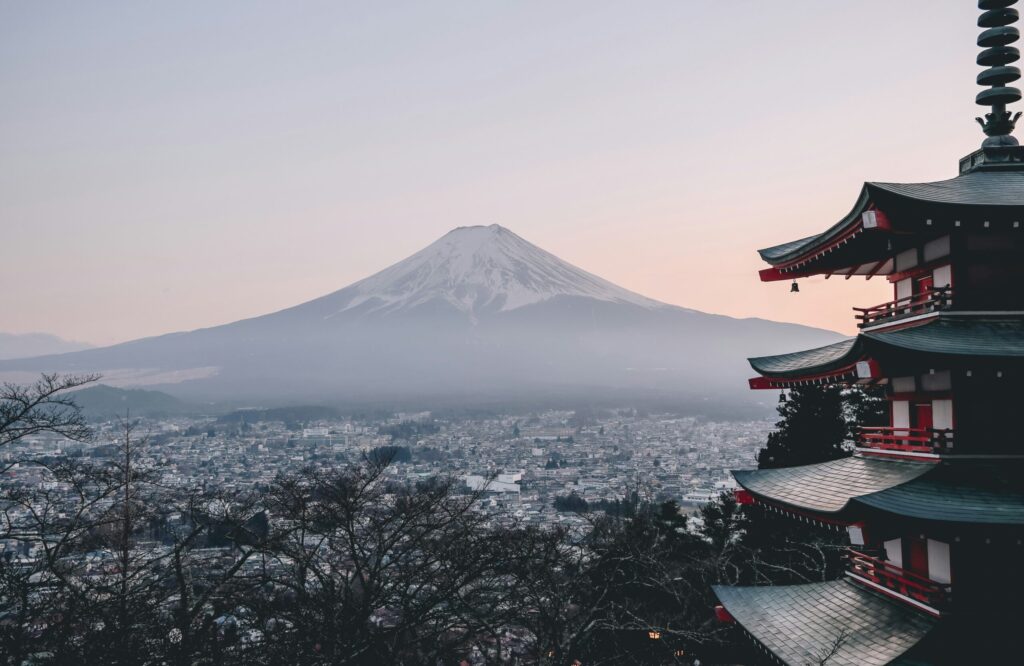
Search ryokan and traditional inn options in Kyoto on Expedia or go straight to Hakone, which is the classic ryokan destination and sits at the foot of Mount Fuji.
9. Book Experiences in Advance – The Good Ones Fill Up
A few Japan experiences that require advance planning:
Tea ceremony: Book a Kimono tea ceremony in Kyoto – this is the quintessential Japan cultural experience and the good operators fill weeks in advance.
Ninja experience: Silly fun and genuinely memorable. Ninja experience in Osaka is popular with everyone from solo travelers to families.
Teamlab digital art museums: The Teamlab Borderless and Planets installations in Tokyo are booked out weeks ahead. This is not a day-of experience. Plan for it or miss it.
Popular restaurants: Omakase sushi counters and highly-rated ramen spots that accept reservations fill up fast. Use Tablecheck or Omakase.com to look for reservation availability before you go.
Nara: The deer park is free and deer are absolutely everywhere, but if you want to do the Todai-ji temple or any guided experience, book Nara day trip tours from Kyoto or Osaka in advance.
10. Get Out of the Big Cities – Even Just for a Day
Tokyo, Kyoto, and Osaka are extraordinary. They are also not all Japan is. And once you’ve done one trip where you stayed entirely in the big three, you will spend the entire flight home calculating when you can come back to see everything you missed.
Day trips that completely deliver:
- Nara from Kyoto or Osaka – wild deer literally walking up to you at ancient temples
- Hakone from Tokyo – Mount Fuji views, hot springs, open-air sculpture museum
- Miyajima Island from Hiroshima – the floating torii gate is as beautiful in person as every photo suggests
- Takayama (an overnight) – the most perfectly preserved traditional Japanese town, and a slower pace that feels like a different century
Don’t over-schedule. Leave space for being surprised.
11. A Note on Animal Attractions
This comes up a lot in first-timer Japan planning, and I want to be honest about it: Japan has a significant number of animal cafes and attractions that are not operating ethically. Owl cafes, hedgehog cafes, certain penguin bars – many of these keep animals in conditions that aren’t good for them, regardless of how photogenic the concept is.
The cat cafes vary enormously. If you want to visit one, look for places with spacious layouts, well-socialized cats that move freely, and verifiable welfare standards. Skip any attraction that keeps nocturnal animals tethered or in unnaturally bright environments.
12. What to Pack for Japan (Specifically)
Japan has some specific packing requirements that differ from general Europe or Southeast Asia travel:
- Packing cubes or compression bags – luggage space on trains is tight. Travel as light as you possibly can.
- A small crossbody bag – pickpocketing is extremely rare in Japan, but you’ll want hands-free for trains and walking
- A high-quality portable charger/power bank – you will be navigating on your phone constantly
- Comfortable walking shoes – you will walk more steps per day in Japan than almost anywhere else. Plan for it.
- A small day bag or tote – for shopping, temple visits, and beach days. Japanese grocery and convenience stores have reduced single-use plastic bags, so having your own is both practical and polite.
13. A Few Cultural Notes That Actually Matter
- Don’t eat or drink while walking. There are places where it’s tolerated (festival streets, specifically), but as a general rule, Japanese people eat standing still or sitting down.
- Don’t talk on your phone on trains. Switch to silent and text. This is taken seriously.
- Be quiet on public transit in general. The social norm is calm and quiet, and visitors who don’t observe it stand out immediately.
- Bow slightly when thanking someone. You don’t need to know formal bowing etiquette – even a small, genuine nod of appreciation reads correctly and is warmly received.
- Carry a small handkerchief or pocket tissues. Many public restrooms don’t have hand dryers or paper towels.
Where to Stay in Japan’s Big Three
Tokyo: Search Tokyo hotels – Shinjuku or Shibuya put you central for everything. Asakusa is quieter and more traditional. Harajuku is great if you want to walk directly into youth culture in the morning.
Kyoto: Search Kyoto hotels – stay in Higashiyama Ward to wake up inside the historical districts, or the city center (Nakagyo) for walkability to both shopping and temples.
Osaka: Search Osaka hotels – Dotonbori area for food and energy; Namba or Shinsaibashi for shopping and nightlife access.
One Last Thing: If You’re Ready to Stop DIY-ing It
Japan is genuinely one of the more manageable DIY destinations in Asia – the infrastructure is world-class, the safety is unmatched, and the people are extraordinarily helpful. Most first-timers navigate it beautifully on their own with a little planning.
But if you’re dreaming about something more – a 10-day itinerary that strings together the right cities with a ryokan in the right location and makes sure you don’t waste a single day backtracking – that kind of custom trip-building is what I do at Styled Getaways. Feel free to come find me there when the DIY planning starts to feel like a second job.
Japan is worth every bit of effort. Go.
You Might Also Like
- Europe Packing Guide: My Checked Bag Essentials for Stress-Free Travel
- Find Your Dream Travel Destination: Take the Quiz & Get Matched to Your Perfect Getaway
- The Best Gluten-Free Travel Snacks for Easy, Stress-Free Trips
A Quick Note on This Post
This post contains affiliate links, which means I may earn a small commission if you book or purchase through one of my links – at no extra cost to you whatsoever. I only link things I’d genuinely recommend. Opinions are fully my own.
Travel information, particularly regarding taxes, visa requirements, and booking rules, changes frequently. Always verify current requirements with official sources and your airline or accommodation before traveling. I am not responsible for changes in policies, pricing, or availability.
For personalized travel planning and booking assistance, visit Styled Getaways. Cupcake & Carry-on is an independent travel blog.