The Reality of Picking an Amalfi Coast Base
Here is what the Instagram version of the Amalfi Coast does not tell you: the coast is not one destination. It is 13 towns stitched along a single winding cliff road, and where you sleep determines whether your trip feels like a dream or a logistics exercise.
Pick wrong and you spend your vacation on a sweltering bus, hauling luggage up 400 stairs, or crossing the coast twice a day to reach dinner. Pick right and everything – the ferries, the restaurants, the evening passeggiata – is within a ten-minute walk.
This guide breaks down the five towns that matter, who each one is actually for, and the hotels I would book in each – with a strong preference for the historic properties, because the Amalfi Coast’s soul is its old palazzi, not its new glass boxes.
The Quick Answer: Which Town Is Right for You
- Positano – the icon. Most beautiful, most expensive, most stairs. Book here if the view is the whole point and the budget allows.
- Amalfi – the practical heart. Central for ferries, flatter than the rest, best value of the big names.
- Ravello – the romantic summit. Highest, quietest, and the best views of the entire coastline.
- Praiano – the sunset alternative. Positano’s calmer, cheaper neighbor down the road.
- Atrani – the insider pick. Amalfi’s tiny, untouristed twin town, ten minutes on foot.
Still unsure? Here is the one-line version: first visit and budget is no object – Positano. Want convenience and value – Amalfi. Want views and romance – Ravello. Want calm and lower prices – Praiano or Atrani.
Positano: The One You Pinned to Your Board
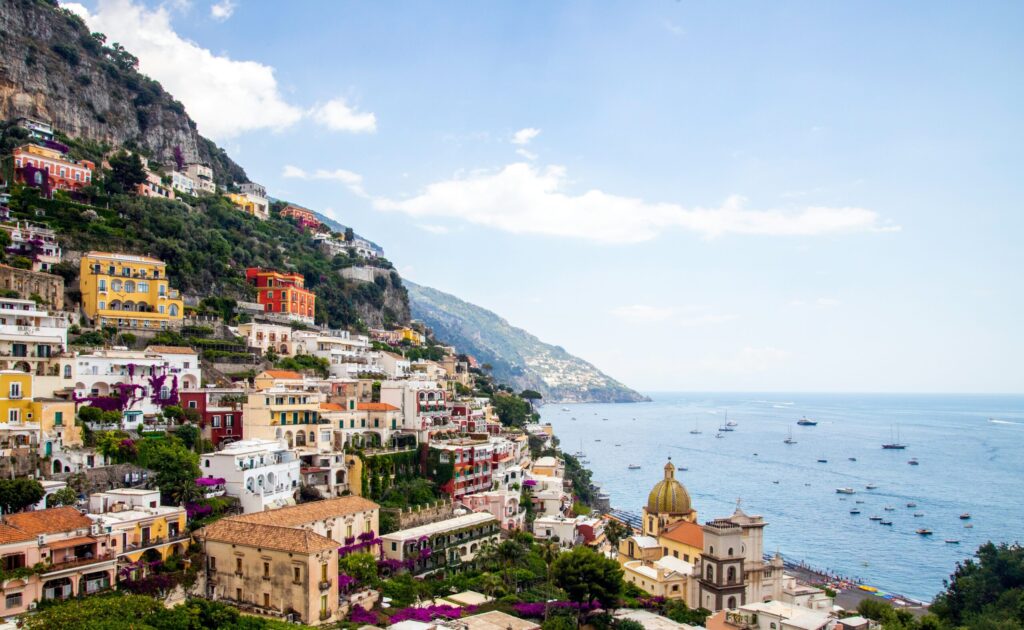
Everything you have seen photographed on this coast was probably shot here – the pastel houses stacked like a wedding cake, the dome of Santa Maria Assunta tiled in majolica, the beach tucked below. Positano is the most vertical town on the coast, which is code for: the views come with stairs. Every hotel description here means “a climb above” or “a descent below.”
Hotel idea: Le Sirenuse. The grande dame of the coast, opened in 1951 when the Sersale family converted their 18th-century summer palazzo. John Steinbeck wrote about this town in 1953, and Le Sirenuse is still the hotel he would recognize: majolica-tiled floors, family antiques, and La Sponda, the candlelit restaurant where the staff light 400 candles every evening. It is the most iconic hotel on the Amalfi Coast, and it never stopped feeling like a private residence. (Condé Nast Traveler)
Hotel idea: Palazzo Murat. An 18th-century Neapolitan baroque palace that was the summer residence of King Gioacchino Murat of Naples, Napoleon’s brother-in-law, sitting in the heart of Positano wrapped in a botanical garden planted in the 1700s. Rooms in the historic palazzo feel like sleeping inside an Italian film set, and the garden restaurant is one of the most romantic tables in town. It is also steps from the church and the beach – rare for Positano, where most hotels sit high above the action. (Palazzo Murat)
Who Positano is for: the traveler whose trip is the view. You accept the stairs and the premium because waking up to that skyline is the entire assignment.
Amalfi: The Practical Heart
Amalfi was a maritime republic that once rivaled Venice, and its centerpiece – the 9th-century Duomo with its striped Arab-Norman facade – is the most dramatic cathedral square in Italy. Practically speaking, Amalfi is the coast’s transport hub: ferries to Positano, Capri, and Salerno leave from its pier, and it is one of the few major towns where you can actually walk from the bus stop to dinner without a mountain expedition.
Hotel idea: Hotel Santa Caterina. Opened in 1904 by the Gambardella family, who still run it three generations later, Santa Caterina is the grande dame of Amalfi: a pink-and-white villa on its own cliffside estate, with two glass elevators carved into the rock that carry you down to a saltwater pool and private beach club carved from the cliff. It combines grand-hotel history with the one amenity Positano’s cliff hotels cannot promise: the sea, reached by elevator instead of 400 steps.
Check rates at Hotel Santa Caterina
Who Amalfi is for: the traveler who wants the postcard coast without the logistics tax. Best base for first-timers, ferry-hoppers, and anyone pairing the coast with day trips.
Ravello: The Romantic Summit
Ravello sits 365 meters above the sea, a terrace of gardens and villas floating above the entire coastline. It is quieter, greener, and more aristocratic than the shore towns – this is where Wagner found inspiration for his operas, and where the gardens (Villa Cimbrone’s Terrace of Infinity, Villa Rufolo’s blooming courtyards) are the actual attractions.
Hotel idea: Caruso, A Belmond Hotel. A former 11th-century palace perched at the highest point of Ravello, famous for one of the most beautiful hotel pools on Earth: a heated infinity pool that appears to spill off the cliff into the sea and sky. Inside, the palace keeps its vaulted ceilings, antique furniture, and a music room worthy of the town’s history. The daily boat trip to explore the coast from the water is included – a rare touch at this level. (Belmond)
Check rates at Caruso Belmond.
Praiano: The Sunset Alternative
Praiano is what Positano was twenty years ago – same dramatic cliffs, same turquoise water, half the crowds and noticeably softer prices. It stretches along the coast between Positano and Amalfi, and it faces west, which makes it the best sunset position on the entire coast. The famous La Gavitella beach stairway and the Path of the Gods trailhead are both here.
The trade-off: fewer big hotels and a quieter evening scene. This is the town for travelers who want the cliffside magic without the Positano prices or the Positano crowds in July.
Atrani: The Insider Pick
Atrani is ten minutes’ walk from Amalfi’s Duomo but feels like a different world: a tiny medieval borgo of white houses stacked around a small piazza, zero coach-tour energy, and restaurants where the owner remembers your order. It is the best-value base with direct access to Amalfi’s ferries – and the flattest town on the list, which matters more than you think once you have climbed Positano once.
Who Atrani is for: travelers who want authenticity and value, and efficiency travelers who would rather walk ten flat minutes to the ferry than ride a bus over a cliff.
The Logistics Nobody Warns You About
Do not rent a car for the coast itself. The Amalfi Drive is one of the most beautiful roads in Europe and one of the most stressful: summer traffic, hairpins the width of a bus, and parking at 30-40 euros per day where you can find it. The smarter play (complete parking guide): if you must have a car, park it in Sorrento or Salerno and continue by ferry or bus.
Take the ferries. From April through October, ferries connect Positano, Amalfi, Atrani, Capri, and Salerno, and they are faster, cooler, and infinitely prettier than the road. A coastal base with a ferry pier (Positano, Amalfi, Atrani) beats a clifftop base without one.
The SITA bus fills up. The buses that crawl the coast road are cheap and scenic, but in high season they pass full. Board at the origin station (Amalfi or Sorrento) rather than mid-route, and skip peak midday runs.
Stairs are the currency. Whichever town you choose, pack for verticality: one good pair of walking shoes and a bag with wheels you are prepared to carry. Every “5 minutes from the beach” in Positano secretly means a staircase.
Book 4-6 months out for summer. The small historic properties (60-90 rooms and under) sell out first – Le Sirenuse and Santa Caterina are often gone by January for July stays.
When to Go
- May and late September-October – the sweet spot: warm sea, open restaurants, manageable crowds
- June – beautiful, busier
- July-August – peak heat, peak crowds, peak prices; book a hotel with a pool and hide at midday
- April – mild and green, but the sea is cool and some beach clubs are still closed
The Styled Getaways Angle
Choosing a base town is really choosing your trip’s rhythm – and that decision is exactly what I make for clients every week.
- For my aesthetic-first clients: Positano is your town, and Le Sirenuse or Palazzo Murat is your hotel. I time your stay for the light and book the Flytographer session on the beach at golden hour, when the pastel houses glow.
- For my reassurance-first clients: Amalfi or Atrani – flat streets, ferry at the doorstep, and a hotel like Santa Caterina where the elevator does the cliffs for you. I arrange the transfers, the dinner reservations, and a plan for every stair before you see one.
- For my efficiency-first clients: Amalfi base, ferry-first itinerary, zero rental car, zero backtracking. Maximum coast per minute, with the Path of the Gods hike booked for the one morning it is worth the climb.
If you want the Amalfi Coast planned around the right base, the right rooms, and the right light – that is Styled Getaways.
You Might Also Like
- The Most Beautiful Historic Hotels in Europe with Incredible Interiors
- Hotels I Love for a Solo Wellness Escape in Europe
- How to Plan a Multi-City Europe Trip Without Burning Out
This post contains affiliate links. If you book through my links, I may earn a small commission at no extra cost to you. I only recommend hotels I have thoroughly researched or would plan for my own clients. For full-service travel planning, visit Styled Getaways.