

The Reality of Picking a Tokyo Base
Tokyo is not a city with a center. It is 23 cities wearing a trench coat, stitched together by the world’s most punctual train network, and the area you choose becomes the rhythm of your whole trip.
Pick wrong and you spend 90 minutes a day underground in the world’s busiest stations, watching your vacation disappear into a commute. Pick right and you step out of your hotel into exactly the Tokyo you came for – neon canyons, silent shrine lanes, or a glass-tower neighborhood where dinner and the Shinkansen platform are both five minutes away.
The good news: there is no wrong answer on train access. Tokyo’s rail makes almost every base workable. What changes between neighborhoods is the energy at 9 PM, the size of your room, the price, and the walk home at night.
Here are the five areas that matter, who each one is for, and the hotels I would actually book – with a bias for properties that have a story, because Tokyo is full of glass towers and short on soul.
The Quick Answer: Which Area Is Right for You
- Shinjuku – maximum energy. Best transport hub in the city, endless food and nightlife. Loud, electric, slightly chaotic.
- Shibuya – the youthful icon. Crossing, fashion, walkability. Great first-timer base that is slightly less frantic than Shinjuku.
- Ginza – the refined one. Elegant, calm streets, serious shopping and dining. Feels upscale without being stuffy.
- Marunouchi and Tokyo Station – the elegant practical choice. Closest to the Shinkansen, quiet at night, and the most historic hotel rooms in Tokyo.
- Asakusa – old Tokyo. Senso-ji Temple at your doorstep, traditional atmosphere, friendlier prices.
The one-line version: first time and want it all – Shinjuku or Shibuya. Want refined and walkable – Ginza. Taking the Shinkansen and value your mornings – Tokyo Station. Want tradition and lower prices – Asakusa.
Shinjuku: Maximum Tokyo
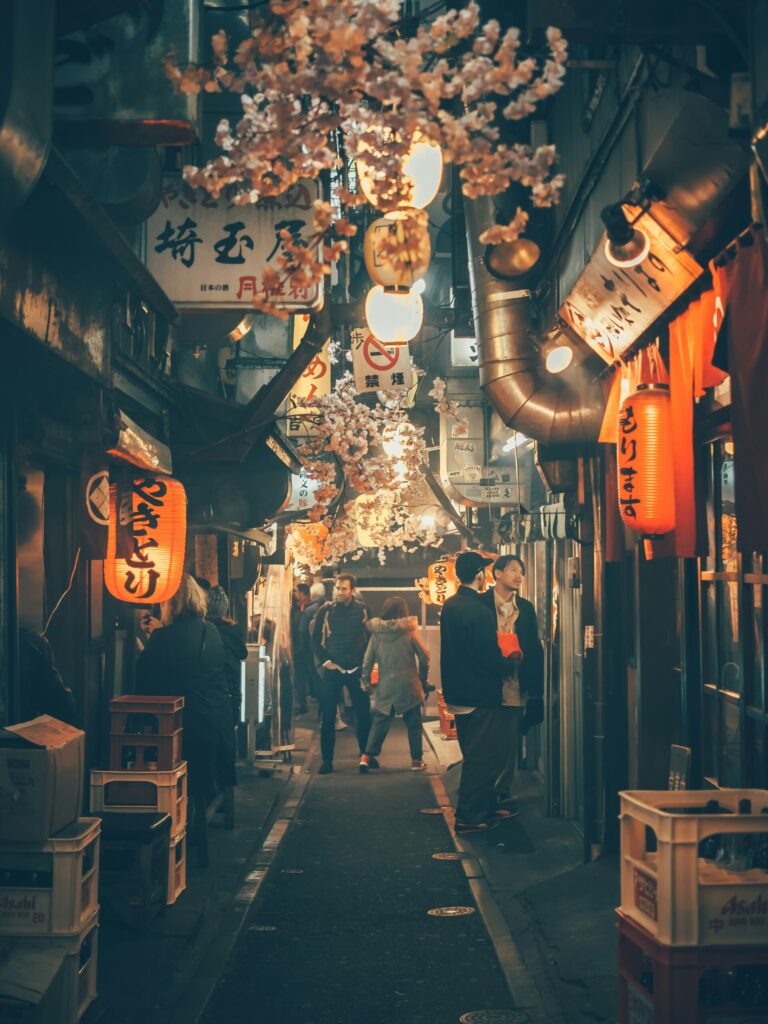
Shinjuku Station is the busiest railway hub on Earth, and staying above it means the entire city is one transfer away: direct trains to Shibuya, Harajuku, the Ghibli Museum, and Mount Fuji day trips. Above ground, the neighborhood stacks everything – Omoide Yokocho’s smoky yakitori alleys, Golden Gai’s six streets of tiny bars, department store food halls, and the free observation decks of the Tokyo Metropolitan Government Building.
Hotel idea: Park Hyatt Tokyo. Yes, it is a modern tower – but it is the tower of Lost in Translation, freshly renovated in 2024, with the New York Grill on the 52nd floor still serving dinner beside one of the great skyline views in Asia. For many travelers this is the Tokyo hotel on the bucket list, and the neighborhood is the reason.
Who Shinjuku is for: travelers who want the neon, the food, and the logistics to be effortless. Night owls, foodies, and anyone who wants the whole city on one train line.
Shibuya: The Youthful Icon
Shibuya is the Tokyo of the famous crossing and the fashion streets, but the neighborhood rewards you most in its quieter edges: Daikanyama’s boutiques, the bookstores and coffee shops of the area’s low-rise lanes, and Shibuya Sky, the open-air observation deck that is arguably the best skyline view in the city at sunset.
The trade-off: hotels in Shibuya proper tend toward sleek-modern and compact rooms. Book here for atmosphere and walkability rather than grand rooms.
Who Shibuya is for: first-timers who want the iconic Tokyo experience out the front door, shopping people, and anyone who plans their evenings around neighborhood wandering rather than one big destination.
Ginza: The Refined One
Ginza is Tokyo at its most composed: wide boulevards, flagship stores, depachika food halls that look like jewelry cases, and a dining scene that ranges from century-old unagi houses to some of the best sushi counters on the planet. It is walkable, feels safe and calm late into the evening, and it borders Tokyo Station – so you get the elegance without giving up logistics.
The trade-off: hotel rates are premium, and the neighborhood winds down earlier than Shinjuku. This is a place for dinners and department stores, not bar-hopping.
Who Ginza is for: travelers who prefer elegance over energy, serious shoppers and diners, and repeat Tokyo visitors who have already seen the neon.
Marunouchi and Tokyo Station: The Historic Heart
Marunouchi is the quiet district of red-brick and stone facades between Tokyo Station and the Imperial Palace moats, and it is my pick for travelers who value mornings: the Shinkansen platforms are inside the station itself, meaning you roll out of bed and onto the train to Kyoto with zero transfers.
Hotel idea: The Tokyo Station Hotel. The most historic hotel in the city, opened in 1915 inside the red-brick Marunouchi station building that opened its doors in 1914 – a grand European-style monument of arched windows and vaulted ceilings that survived the 1923 earthquake and the war, and reopened in 2012 after a meticulous restoration. Sleeping inside a national landmark train station, with platforms literally through the doors, is an experience no glass tower can copy.
Check rates at The Tokyo Station Hotel
Hotel idea: Imperial Hotel Tokyo. Tokyo’s grand dame since 1890, and the hotel that introduced Western luxury hospitality to Japan. The Frank Lloyd Wright-designed main building of 1923 famously survived the Great Kanto Earthquake and defined the hotel’s legend – and the current hotel keeps his memory alive in the Old Imperial Bar, where original Oya stone and terracotta from Wright’s building still line the walls and his designed wood grill sits above the bar.
Check rates at Imperial Hotel Tokyo
Hotel idea: HOSHINOYA Tokyo. The wildest card in the deck: a 17-story tower ryokan in Otemachi where every floor is a private ryokan of six rooms connected by tatami corridors, all shoes off at the door, washi paper and tatami finishes throughout – and a genuine hot spring on the top floor, with water piped from 1,500 meters below Tokyo, open-air under the sky. Condé Nast Traveler calls it the only hotel in Tokyo with a real onsen. This is the way to have the ryokan experience without leaving the city. (Hoshinoya Tokyo, Condé Nast Traveler)
Check rates at HOSHINOYA Tokyo
Who Marunouchi is for: Shinkansen travelers, business-meets-leisure trips, history lovers, and anyone who wants the calmest, most polished version of central Tokyo.
Asakusa: Old Tokyo
Asakusa is the Tokyo of imagination: the great lantern of Senso-ji Temple, Nakamise-dori’s snack stalls, rickshaws rolling past kimono rentals, and evening streets that still feel like a woodblock print. It sits on the east bank of the Sumida River, with easy Skytree access and noticeably lower hotel prices than the west side.
The trade-off: it is farther from Shibuya and Shinjuku (30-40 minutes by metro), so base yourself here when tradition is the point of the trip, not a day trip.
Who Asakusa is for: first-timers who care more about temples than nightlife, budget-conscious travelers, photographers, and anyone visiting during the cherry blossom or fireworks seasons when the river district shines.
A Tokyo Wild Card: Hotel Gajoen
If you want one hotel that surprises everyone, it is Hotel Gajoen Tokyo in Meguro, near the Meguro River. Opened in 1931 and now over 90 years old, it is a genuine museum hotel: more than 2,500 pieces of Japanese painting and traditional craft fill its halls, including the famous Hundred Steps staircase gallery built at the peak of Art Deco, where every room was painted by a different artist of the era. Suites inside the historic wing are works of art themselves. It is quieter, lower, and stranger than anything in the center – in the best way – and it is minutes from the Meguro River’s famous cherry blossom promenade.
Check rates at Hotel Gajoen Tokyo
The Logistics Nobody Warns You About
Stay within a 5-minute walk of a station. In Tokyo, the distance from your hotel to the nearest station matters more than the neighborhood name. Check the walking time on the hotel map, not the straight-line distance.
Get a Suica (or use your phone wallet). Tap in and out of every train, bus, and konbini. Do not buy individual tickets – you will lose an afternoon doing math at fare machines.
Plan around the Yamanote Line. The green loop line connects Shinjuku, Shibuya, Ginza-adjacent, Ueno, and Tokyo Station. A base on the loop makes the whole city simple.
Rooms are small. This is normal. Japanese hotel rooms are compact by design and immaculately planned. If space matters, look for rooms listed at 25 square meters or more, or pick a suite at the historic properties above.
Book 3-6 months out. Tokyo’s most characterful hotels (Tokyo Station Hotel, Hoshinoya, Gajoen suites) sell out earliest – and cherry blossom season sells out a year ahead in some cases.
When to Go
- Late March to early April – cherry blossoms, the most beautiful and the most booked week of the year. Reserve hotels the moment dates open.
- October to November – crisp air, autumn foliage, and the best all-around sightseeing weather
- Late April to early May – avoid if you can: Golden Week is Japan’s biggest domestic travel crush
- June – the rainy season: fewer crowds, pack an umbrella
- July-August – hot and humid, but the fireworks festivals are spectacular
A Tokyo trip has more moving parts than almost any city on Earth – rail passes, neighborhood logic, restaurant bookings that open exactly one month out. This is what I do all day.
- For my aesthetic-first clients: Shibuya and Ginza for the light and the streets, Hoshinoya or Gajoen for the photos, and a Flytographer session booked in Asakusa at dusk, lanterns glowing behind you. Optionally in kimono – I can arrange that too.
- For my reassurance-first clients: Marunouchi or Shinjuku near the station, hotels where English service is seamless, and a day-by-day plan that never requires you to decode a transfer map alone. I map every route before you land.
- For my efficiency-first clients: Tokyo Station Hotel as the base, Shinkansen day trips sequenced so you never backtrack, and restaurant reservations timed around your rail schedule. Maximum Japan per minute.
If you want Japan planned around the right neighborhoods, the right trains, and the right hotels – that is Styled Getaways.
You Might Also Like
- Japan First-Timer Guide
- Celiac in Japan: How to Eat Safely and Well
- How to Plan a Multi-City Europe Trip Without Burning Out
This post contains affiliate links. If you book through my links, I may earn a small commission at no extra cost to you. I only recommend hotels I have thoroughly researched or would plan for my own clients. For full-service travel planning, visit Styled Getaways.
Disclaimer: This blog is for general information only and reflects the author’s opinions at the time of writing. Details like prices, hours, and availability change without notice – verify directly with each hotel or vendor before booking. Use of this information is at your own risk; the author and Styled Getaways are not liable for any loss, injury, or inconvenience arising from its use, and travel always involves inherent risks you assume responsibility for. Some links are affiliate links: if you book through them, I may earn a commission at no extra cost to you, which never changes what I recommend. Nothing here is legal, financial, or medical advice.

